

Preparing for More Than the First Day: A Gentle Back-to-School Guide for Children
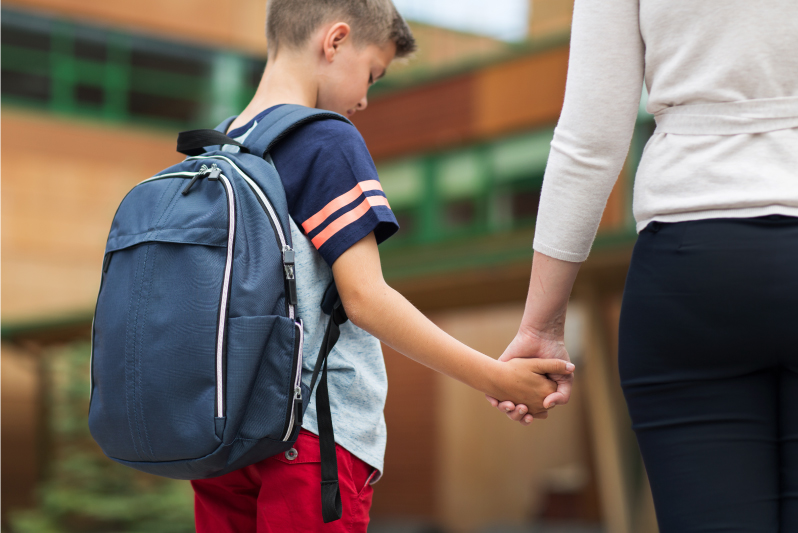
As a new school year approaches, families begin preparing in familiar ways. School supplies are purchased, backpacks are organized, bedtimes are adjusted, and calendars begin filling up again.
These practical preparations matter. However, back-to-school transitions for children, especially those sensitive to change, uncertainty, or sensory demands, involve much more than getting ready for that first morning.
Going back to school means:
- Entering an unfamiliar classroom
- Meeting a new teacher and learning different routines
- Navigating loud, crowded hallways
- Managing higher academic expectations
- Finding their place within shifting social dynamics
Each of these shifts asks a child to adapt, yet much of that emotional effort remains invisible to the adults around them. A child may appear quiet, distracted, irritable, overly energetic, or unusually tired. These responses are not signs of defiance or unwillingness. More often, they reflect just how much energy a child’s nervous system is using to process this major life transition.
Preparing for school is not only about knowing what supplies to pack. It is about helping children feel grounded, familiar with what is ahead, and supported in the face of uncertainty.

1. Re-establish Predictable Daily Routines
During the summer, sleep schedules, mealtimes, and morning rhythms naturally become more relaxed. Returning abruptly to a rigid school timeline can add another layer of stress to an already demanding transition.
When possible, begin easing back into routines gradually before the first day arrives:
- Adjust sleep gradually: Move bedtimes earlier in small, 10 to 15-minute increments.
- Anchor wake-up times: Return to a consistent morning wake-up time a week or two in advance.
- Practice morning steps: Walk through the morning sequence without the rush or pressure of a real school day.
- Prep the night before: Lay out clothes and pack backpacks the evening before to minimize morning friction.
- Use visual schedules: Create a simple checklist or picture schedule to reduce morning cognitive load.
The goal is not a flawless morning, but rather reducing the number of unknown variables a child has to navigate all at once. Predictability gives the body and nervous system fewer surprises to manage.
2. Prepare for Sensory Changes in the School Environment
Every school carries its own unique sensory landscape: loud bells, flickering fluorescent lights, crowded entryways, bustling cafeterias, unfamiliar smells, stiff new clothing, and constant movement.
A child may feel genuinely excited to return while simultaneously feeling overwhelmed by these sensory demands. Excitement and sensory strain can easily coexist.
Before school begins, talk through what the physical environment might feel like:
- "What parts of the school day usually feel easiest or most comfortable for you?"
- "Are there places in the building that tend to feel too loud or crowded?"
- "What helps you feel calm when a room starts to feel like too much?"
- "Is there a quiet spot you can visit if you need a quick reset?"
- "Who is a trusted teacher or staff member you can turn to for help?"
A simple, shared plan reduces anxiety. For some children, this plan might include noise-dampening headphones, scheduled movement breaks, a quiet corner to decompress, or permission to step away briefly. The purpose is not to eliminate every challenge, but to let the child know that support is always accessible.
3. Make Room for Back-to-School Anxiety and Mixed Feelings
Well-meaning adults often ask: "Are you excited to go back to school?"
While encouraging, this question can unintentionally leave little room for worry, reluctance, or nervousness. Instead, try open-ended invitations:
- "What are you wondering most about school this year?"
- "Is there anything about going back that feels a little big or tricky right now?"
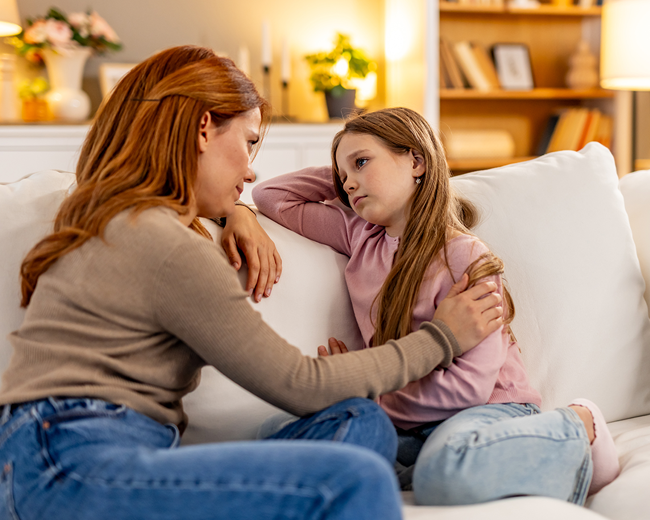
Children do not always need immediate reassurance, cheerleading, or a quick "You’ll be totally fine!" Sometimes, they simply need an adult who can listen attentively without rushing to fix the discomfort.
When a child’s feelings are acknowledged, they do not have to waste energy trying to hide them. Validation does not amplify fear; it ensures a child never feels alone in it.

4. Understand After-School Restraint Collapse
Navigating a full school day requires sustained emotional and physical effort. Throughout the day, children are constantly:
- Adapting to unexpected schedule changes
- Following complex, multi-step instructions
- Filtering out relentless background noise and sensory input
- Regulating their emotional reactions in social settings
- Working hard to meet behavioral and academic standards
By the time they arrive home, their internal battery is often drained. Home is the space where children finally feel safe enough to release the tension they have held in all day.
This release is known as after-school restraint collapse, and it commonly looks like:
- Sudden fatigue, silence, or zoning out
- Irritability, defiance, or sudden emotional meltdowns
- Tearfulness and withdrawal
- Restlessness or hyperactive movement
These reactions do not mean the school day went poorly. They simply mean your child worked extraordinarily hard to hold it together.
Create a gentle after-school decompression buffer: offer a nourishing snack, dim harsh lighting, provide a low-demand quiet activity, and hold off on asking about homework or grades until their nervous system has had time to settle.

5. Keep a Familiar Comfort Object Close
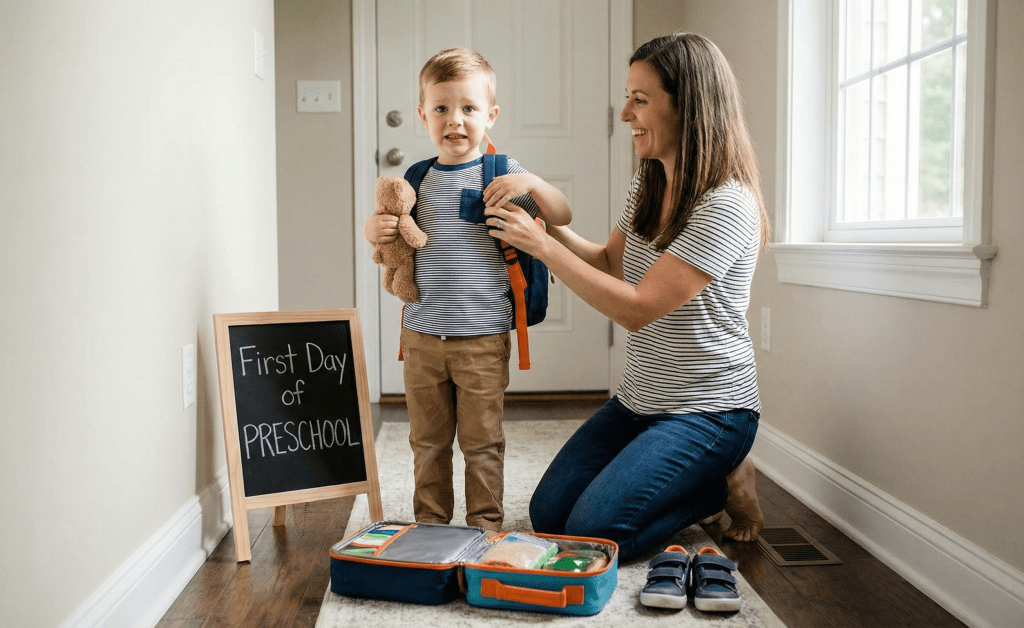
Transitions feel much safer when a small piece of home travels along with the child. This might include:
- A family photo tucked into a pocket or pencil case
- A favorite book tucked inside their backpack
- A short, loving note slipped into their lunchbox
- A comforting keepsake or small sensory fidget
- A soft, grounding companion in their bag
The object itself is less important than the emotional meaning attached to it. A familiar comfort item acts as a bridge between home and school, quietly reassuring the child: "Something safe, loving, and familiar is still with me."
6. Begin with the Child, Not the Checklist
There is no one-size-fits-all approach to back-to-school preparation:
- Some children thrive by touring an empty classroom and meeting their teacher early.
- Some benefit from reviewing a detailed visual schedule, while others need fewer details to avoid anticipatory anxiety.
- Some need active movement breaks; others need a quiet corner to decompress.
- Some need an adult who recognizes that participation may start out quiet, slow, and cautious.
The most effective preparation starts with a simple question: "What would help this particular child feel a little more grounded right now?"
Even small, subtle adjustments can fundamentally reshape how a child experiences the start of the school year.

A Gentler Way to Begin
While the first day of school receives the most attention, true adjustment is a gradual process that unfolds over weeks. Children need time to learn their environment, build trust with new adults, and find their rhythm.
A child does not need to feel completely at ease right away to be making meaningful progress. Often, the greatest support we can provide is a little more predictability, a little less pressure, and a safe harbor to return to when the world feels overwhelming.
At CuddleWorks, we create comforting, weighted companions designed to support children through everyday transitions, sensory routines, and quiet moments of rest. While a companion cannot remove every challenge, it can make an unfamiliar world feel a little safer and much more manageable.